
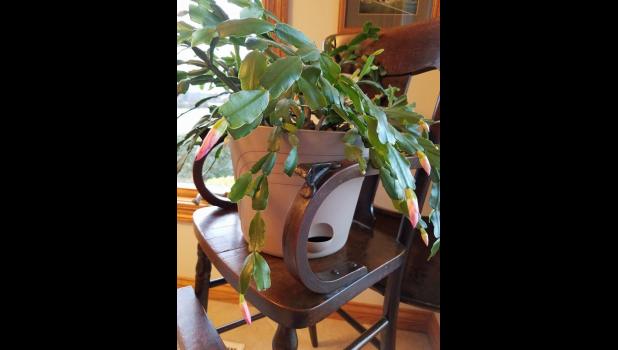
Christmas cactus: The holiday favorite with an identity crisis

COLUMBIA, Mo. – Many cacti sold as Christmas cactus may actually be Thanksgiving cactus in disguise.
University of Missouri Extension horticulturist David Trinklein said he does not want to be Scrooge, but most cacti sold this time of year probably should be labeled holiday cactus.
“Christmas cactus is often mistaken for Thanksgiving cactus because of the proximity of their bloom dates,” Trinklein said. “Most Christmas cacti sold each year are actually Thanksgiving cacti mislabeled. To make matters more confusing, many cultivars of Christmas cactus on the market today are hybrids between these two species.”
Thanksgiving cactus bears stem segments (phylloclades) that are serrated and have two to four clawlike appendages. Christmas cactus has phylloclades that are more rounded.
Holiday cacti are the “gift that keeps on giving,” Trinklein said. When properly cared for, they often outlive their caretakers.
Holiday cacti hail from a small region north of Rio de Janeiro, Brazil. They experience a wet season from December until March and a dry season the remainder of the year. In nature, holiday cacti are epiphytes that root in decaying debris trapped between tree branches and in rocky crevices in shady areas.
Holiday cacti will reward you with beautiful blooms for years to come if you care for them properly, he said. Mimic their natural growing conditions as much as possible.
In the home, holiday cacti perform best in bright, indirect light. Cacti benefit from bright light in the winter, but in summer they prefer shade or partial shade to avoid burning. In the northern hemisphere, they enjoy 70- to 80-degree temperatures from April to September. They bloom best when they have 13 hours of darkness each night. Short days, cool nights and dry conditions in mid-October create a favorable environment for full blooms during the holiday season.
While holiday cacti are not as drought-resistant as their name implies, they do not like “wet feet,” Trinklein said. Too often, owners overwater them, giving rise to the “root rot in a pot” moniker. Water only when the growing medium is dry to the touch. Drain saucers that you may put under the flowerpot so that excess water is not wicked back into the pot. “If in doubt on whether to water, don’t.”
Reduce watering from fall to spring. The leaf segments may shrivel slightly, but this is normal, he said.
Holiday cacti bloom prolifically if they remain slightly potbound, but repotting may become necessary about every three years. Use a porous, well-drained mix. Look for peat-lite mixes formulated specifically for epiphytes such as cacti. Alternatively, add perlite or sterile sharp sand to regular peat-lite mixes.
Fertilize plants only during their growth period of early spring through late summer. Apply a regular fertilizer at one-quarter strength or a houseplant fertilizer according to label instructions.
Cacti buds drop under the stress of a sudden change of temperature, light or environment. Holiday cacti also need a little extra tender loving care when being moved. Protect them from cold as you move them from the store to a warm vehicle and into your home.
To keep your cacti blooming year after year, pattern its care after the plant’s natural habitat. Holiday cacti need short days to flower. From December through March, provide the cacti the same day length they would receive in their native Brazil. Do not overwater and maintain temperatures between 70 and 80 degrees from April to September.
Holiday cacti are good plants to share, Trinklein said. To propagate, break off several stem segments (phylloclades) and let the “wound” heal or dry for five to seven days before placing it in a rooting medium. They form roots rather quickly.
Proper care rewards the caretaker with exquisite blooms and beauty over many years, Trinklein said.
Source: David Trinklein, 573-882-9631
